Search
Evidence review on behavioural science interventions in development and environmental fields in developing countries: Protocol for a systematic review
Based on the evidence gap map of behavioural science interventions within the development and environmental fields in developing countries, this protocol for a systematic review focuses on synthesizing the evidence on...
Document > Other publication
Final report of the Second Performance Review of the Green Climate Fund
The Second Performance Review of the Green Climate Fund covers the GCF-1 period and seeks to inform, among other things, the next update to the strategic plan (USP-2), currently being discussed for the GCF-2 period (...
Document > Evaluation report
Impact evaluation baseline report for FP072: Strengthening climate resilience of agricultural livelihoods in agro-ecological regions I and II in Zambia
This report presents the baseline data for “Strengthening climate resilience of agricultural livelihoods in agro-ecological regions I and II in Zambia” (SCRALA), a project funded by the Green Climate Fund and...
Document > Evaluation document
Evaluation Operational Procedures and Guidelines for Accredited Entity-led Evaluations
These Evaluation Operational Procedures and Guidelines (‘Guidelines’) aim to promote a shared understanding of the requirements of the GCF Evaluation Policy as they relate to the delivery of interim evaluations and...
Document > Policy
Valuing investments in the Global Carbon Market Mechanism as compound real options: Lessons from the Clean Development Mechanism
The Global Carbon Market Mechanism (GCMM) aims to incentivize national or sub-national actors to invest in climate mitigation projects at the same time as limiting the global costs of tackling global warming. Using the...
Document > Other publication
[Approach paper] Independent Evaluation of Green Climate Fund's Approach to the Energy Sector
An independent evaluation of the GCF's approach to the energy sector is undertaken following an approval by the GCF Board in the decision B.34/06 in October 2022. The evaluation will assess the relevance and...
Document > Approach paper
Evidence gap map: Effectiveness of forest conservation interventions
This evidence gap map expanded upon a previous study conducted by the International Initiative for Impact Evaluation related to forest conservation interventions. This review updated evidence for the period 2016 to mid-...
Document > Learning paper
Synthetic review: Effectiveness of climate change mitigation interventions in the private sector in developing countries
The results of the synthetic review show that the evidence on this topic is still limited and spread across various sectors and interventions, with most evidence in the energy, industrial and agricultural sectors. The...
Document > Learning paper
Evidence gap map and intervention heat map: Evidence review on results-based payments
The evidence gap map presents a systematic, multisectoral search of publications in the academic and grey literature. The search was restricted to quantitative studies published between 2000 and 2020 that assessed the...
Document > Learning paper
Evidence review: Just transition
Just transition is now a key element of climate change debates. To date, most learning on just transitions has come from developed countries. This review is the first to provide a rigorous and precise realist summary of...
Evidence review
Systematic review: Effectiveness of life skills training interventions for the empowerment of women in developing countries
The systematic review evaluates the ability of life skills interventions to promote the empowerment of women of all ages. Overall, life skills positively affect a range of self, social and economic empowerment outcomes...
Document > Learning paper
Impact Evaluation Midline Report for FP073 - Strengthening climate resilience of rural communities in Northern Rwanda
This is a midline impact evaluation report of the GCF project FP073 Strengthening climate resilience of rural communities in Northern Rwanda, commonly known as Green Gicumbi Project. The project aims to restore and...
Document > Evaluation document
COA2019: Final report on the independent evaluation of the GCF's Country Ownership Approach
Note: This page refers to the evaluation of country ownership undertaken in 2019. For the 2025 evaluation, please visit COA2025 here.
The GCF Independent Evaluation Unit conducted this evaluation as part of its 2019...
Document > Evaluation report
An Evidence Gap Map on Forest Conservation
This is an updated Evidence Gap Map (EGM) of forest conservation interventions in developing countries based on evidence published from 1990 to 2024. Compared to the 2019 EGM, the EGM shows that the evidence base has...
Document > Other publication
Impact Evaluation Midline Report for FP/SAP 087: Building Livelihood Resilience to Climate Change in the Upper Basin of Guatemala’s Highlands
This report presents the midline findings of the project "Building Livelihood Resilience to Climate Change in the Upper Basins of Guatemala’s Highlands," implemented since 2021 to strengthen ecosystem and water...
Document > Impact evaluation report
Impact evaluation report for FP101: Resilient Rural Belize – Backyard Gardens
This impact evaluation, based on a phase-in randomized controlled trial, draws on baseline data collected in 2021 and endline data gathered in early 2024 from 1,350 households (representing 85 per cent coverage). It...
Document > Impact evaluation report
Independent evaluation of the GCF’s approach to and Portfolio of Climate Information and Early Warning System Interventions (CIEWS)
This evaluation report examines how the GCF has supported developing countries to strengthen resilience, preparedness, and response to climate change. It assesses the Fund’s strategic positioning, partnerships, and use...
Document > Evaluation report
Impact Evaluation Endline Report for FP034: Building Resilient Communities, Wetland Ecosystems and Associated Catchments in Uganda
This impact evaluation assesses FP034, a wetland restoration project implemented across eastern and south-western Uganda. Using a quasi-experimental design and qualitative evidence, the evaluation finds that the project...
Document > Impact evaluation report
RPSP2026: Independent Evaluation of the GCF’s Readiness and Preparatory Support Programme
The evaluation will provide the GCF Board and Secretariat with an independent, evidence-based assessment of the implementation of the revised Readiness and Preparatory Support Programme strategy for 2024–2027. It will...
Evaluation > Programmatic
RPSP Lab Report
This Lab Report is an interim deliverable of the ongoing Independent Evaluation of the GCF’s Readiness and Preparatory Support Programme (RPSP) 2024–2027. It presents synthesized learnings from the evaluation interviews...
Document > Evaluation document
LORTA In-Person Impact Evaluation Design Workshop
The purpose of the in-person impact evaluation design workshop is to support selected GCF-funded activities, accredited entities, project managers, and M&E teams to measure the impact of their project/s....
Event > External event Thailand 
SAP2025: Independent Evaluation of the GCF’s Simplified Approval Process
The evaluation of the GCF’s Simplified Approval Process (SAP) is assessing the extent to which this access modality provides easier access to GCF resources and addresses the needs of countries. The evaluation will be...
Evaluation
COA2025: Independent Evaluation of the GCF’s Approach to Country Ownership
The 2025 Country Ownership evaluation explored how effectively the GCF promotes country-driven processes and supports national climate priorities, building on the Country Ownership Approach assessed in 2019. The results...
Evaluation > Thematic
Independent evaluation of the GCF’s approach to and Portfolio of Climate Information and Early Warning System Interventions
The evaluation of Early Warning Systems aims to assess the GCF's interventions in climate information and early warning systems. The findings from this evaluation are scheduled to be submitted at the first Board meeting...
Evaluation
A postcard from the Caribbean
... is one of the five country case studies for the ongoing the IEU evaluation of the GCF portfolio in Latin America and the ... could be potentially useful for such a context? Read the IEU’s latest work here .) Pride and prejudice When ...
Article > Blog Jamaica 
Evidence gap map: Forestry
This evidence gap map expanded upon a previous study conducted by the International Initiative for Impact Evaluation related to forest conservation interventions in low- and middle-income countries. This review updated...
Evidence review
Evidence review: Results-based payments
Results-based payment interventions involves a funder who agrees to make payments to agents for achieving pre-agreed, verified results. In so doing, result-based payment interventions convene multiple agents to achieve...
Evidence review
My pop moments from COP25
... moment : No one knows. (Spoiler alert: Its one thing the IEU will be working on in 2020.) ‘ Climate value is ...
Article > Blog 
Structure determines behavior. We need insights from Behavioral Economics to save the planet.
... Jyotsna Puri (Jo), Head of the Independent Evaluation Unit (IEU) of the Green Climate Fund (GCF), on the knowledge ...
Article > Interview 
ESG commitments are useful. But have they translated into action?
... About the author Dr. Jyotsna Puri is the former Head of the IEU. She currently serves as Director of Environment, ...
Article > Blog 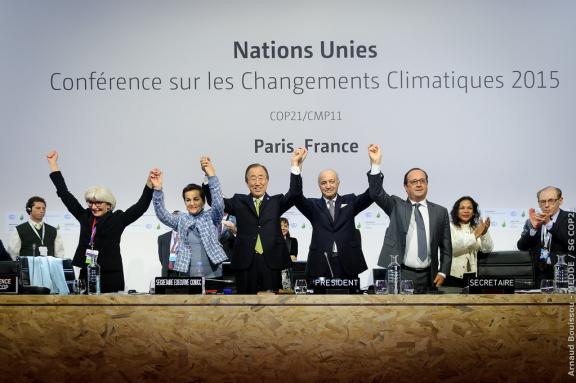
Pages
Filter by type
Filter by Subtype
Filter by Country
Filter by date