The Independent Evaluation Unit (IEU) ensures GCF is accountable and effective. It conducts independent evaluations of GCF's activities to guarantee its accountability and synthesises learnings from high quality and rigorous evaluations to support GCF's effectiveness and efficiency. It operates independently of the GCF Secretariat. Its Head is appointed by and reports directly to the Board.
Watch the video to learn more about the IEU's mandate and role in GCF:
Featured publications

Methodology Report: Evaluation Quality Assessment Framework of AE-led Evaluations
The Evaluation Quality Assessment (EQA) framework is designed for both accountability and learning purposes. AE-led evaluations are individually and collectively assessed by independent reviewers on the extent to which they meet GCF Evaluation Standards (2022), and relevant expectations set out in the GCF Evaluation Policy, in particular the Evaluation Criteria, and other guidance documents, as well as United Nations Evaluation Group (UNEG) standards. The document is designed to orient independent evaluators and others to GCF IEU’s quality assessment process. It has three sections.
The Third Performance Review of the GCF: Summary Report
This summary report presents emerging findings from the TPR to inform initial discussions on the GCF’s strategy and third replenishment. The report looks across four broad dimensions of GCF performance: GCF’s organizational effectiveness; GCF’s partnership effectiveness; GCF’s programming and results; and GCF’s role in the multilateral climate finance system. This summary report presents emerging findings that may evolve as the TPR finishes the final report in time for B.47.
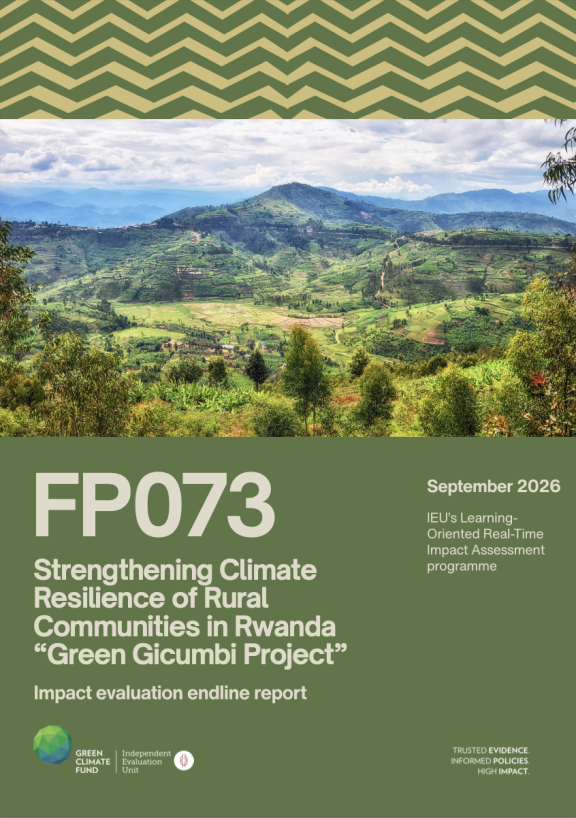
FP073 Impact evaluation endline report: Strengthening Climate Resilience of Rural Communities in Rwanda “Green Gicumbi Project”
This report presents the endline findings of the IEU’s Learning-Oriented Real-Time Impact Assessment (LORTA) of the Green Gicumbi Project (FP073) in northern Rwanda. Drawing on baseline, midline and endline surveys, it assesses the project’s effects on climate-resilient agricultural practices, food security, household livelihoods and climate resilience. The findings show improvements in agricultural practice adoption, food security and resilience, while identifying limitations in income-related outcomes and differences in benefits between male- and female-headed households.
Latest evaluations


Keep up with IEU news
Subscribe