Can Conservation and Livelihoods Go Hand in Hand? Causal Evidence from Madagascar
-
Authorship
Dr. Michell Dong
![]()
Impact Evaluation Specialist - Article type Blog
- Publication date 19 Mar 2026

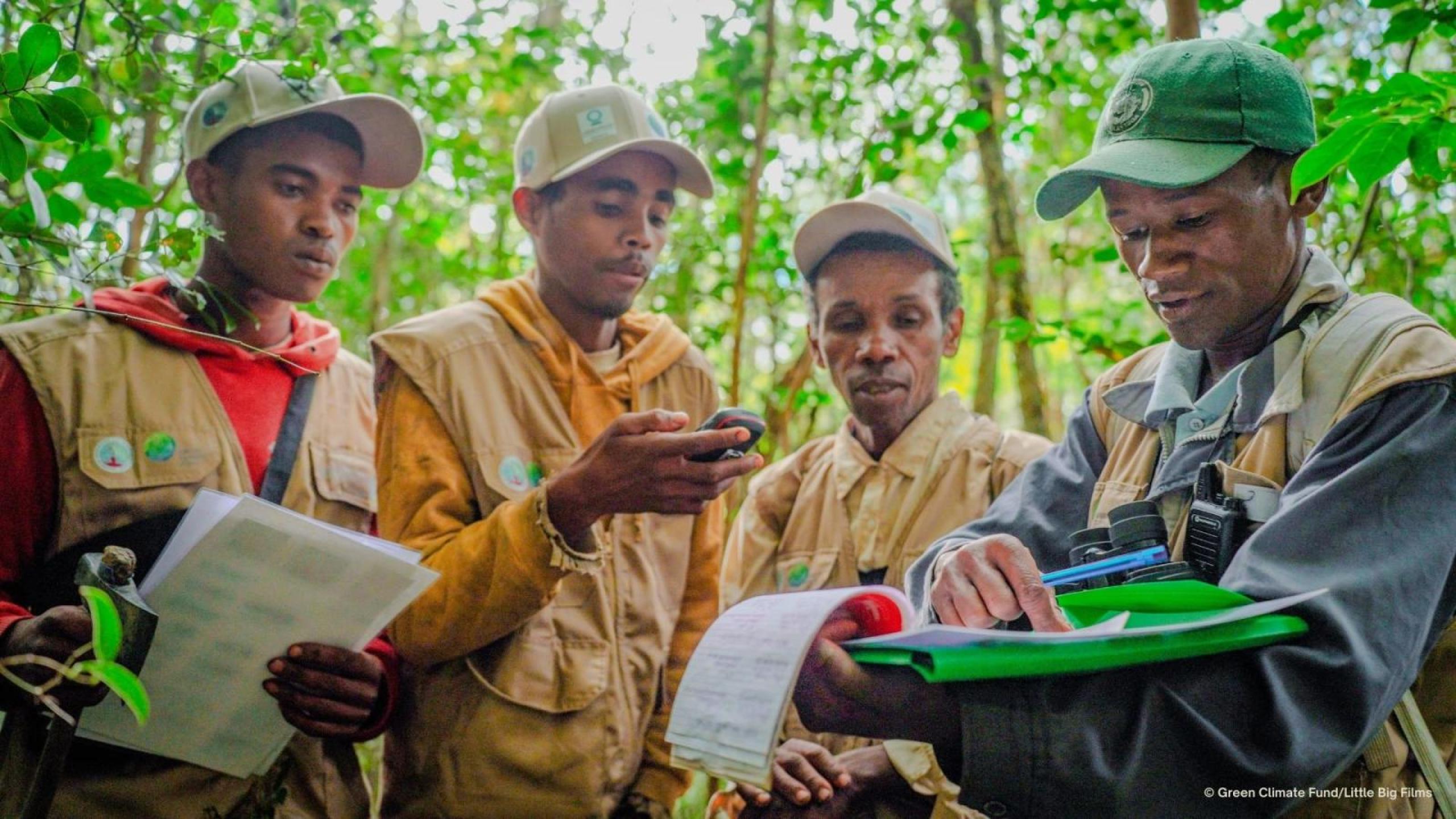
Authored by: Michell Dong
Edited and curated by: Yeonji Kim
Photo credits: Green Climate Fund/Little Big Films
Based on: [Impact evaluation endline report for FP026: Sustainable Landscapes in Eastern Madagascar | Independent Evaluation Unit | Green Climate Fund]
I recently delivered an endline impact evaluation report that assessed the GCF’s Sustainable Landscapes in Eastern Madagascar (SLEM) project, under the IEU’s LORTA programme. This was one of the first impact evaluation projects assigned to me when I joined the IEU in 2023.
The question at hand
Working on the SLEM project’s impact evaluation was particularly interesting as it gave me the opportunity to investigate a question I had been sitting with: can protecting forests and improving rural livelihoods be both achieved simultaneously, or does one come at the cost of the other?
Working across other climate impact evaluations had shown me how much long-term, sustained effort it generally takes to build viable livelihood alternatives for communities that have traditionally relied on a natural resource – and how rarely the conditions for success all come together at once. This blog reflects on the evidence and lessons from the SLEM impact evaluation, useful for climate and conservation programmes facing similar challenges.
Quick facts about Madagascar and the SLEM project
Madagascar sits at a difficult intersection: it is one of the world's most biodiverse countries and one of its poorest. Agriculture remains the backbone of rural livelihoods, with most households relying on smallholder farming that is highly exposed to climate shocks such as cyclones and droughts. Food insecurity is also a persistent challenge, with chronic malnutrition affecting nearly 40 per cent of children. At the same time, the country’s forests, particularly the eastern forest corridors, are globally important ecosystems but continue to face pressure from land clearing, fuelwood collection, and other forms of resource extraction. According to the Food and Agricultural Organization of the United Nations, almost half of its forest cover has been lost in the past 60 years alone. For many rural households in the country, forests function as a safety net - a major source of food, fuel, and emergency income. The challenge for forest conservation is therefore not simply to restrict access, but to make forest protection economically viable for the communities living around them.
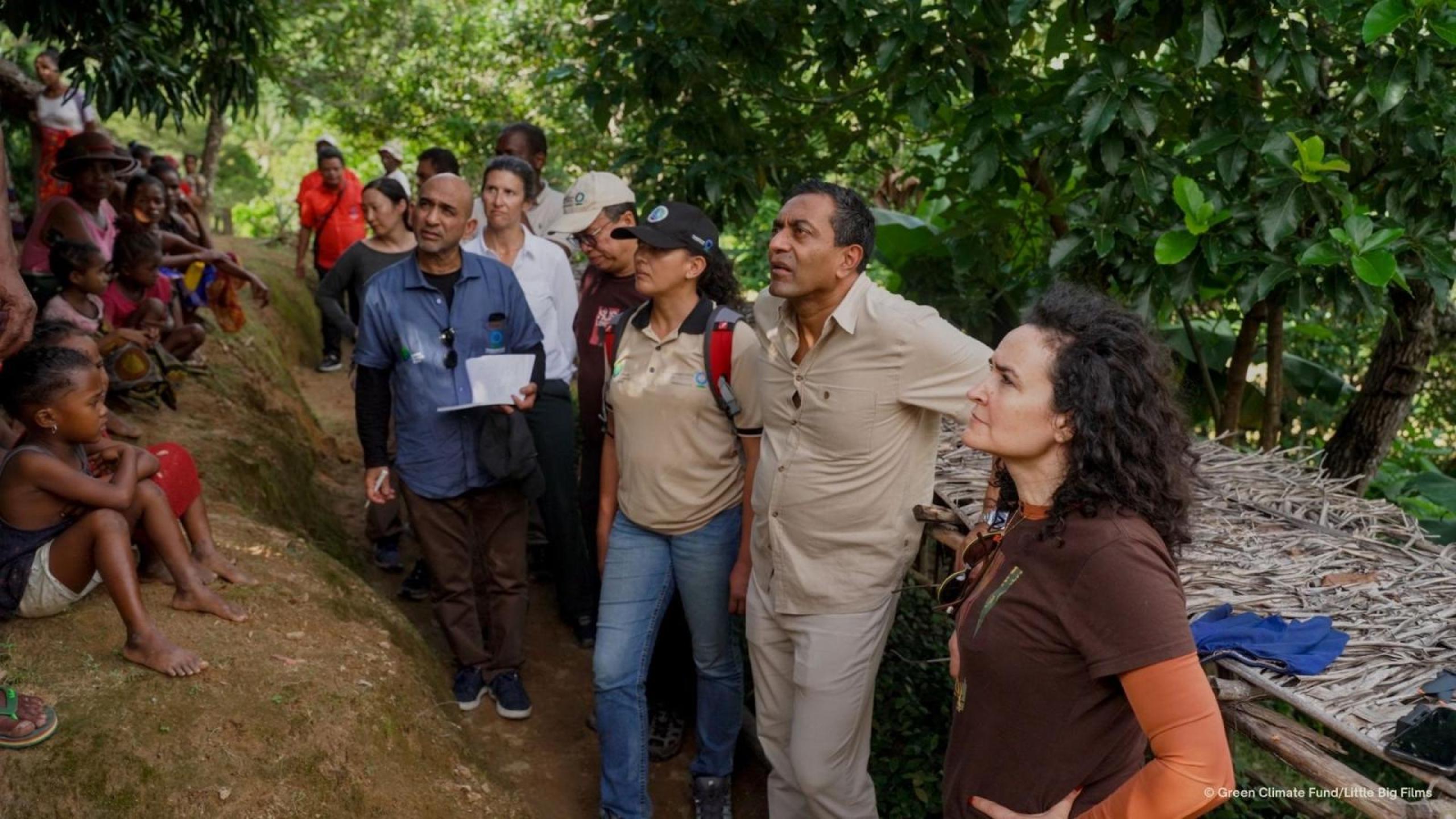
LORTA impact evaluation of the SLEM project and its findings
In this context, the SLEM project operated across the Ankeniheny-Zahamena (CAZ) and Ambositra-Vondrozo (COFAV) forest corridors of the country. It was funded by the Green Climate Fund (USD 15.2 million) and implemented by Conservation International between 2018 and 2025. Through the IEU’s LORTA programme, the impact evaluation followed 1,603 households from 2019 to 2025 using a matched difference-in-differences design.
The headline findings of the impact evaluation are encouraging: conservation and livelihoods can be mutually reinforcing. In this project, “livelihoods” refers mainly to strengthening smallholder farming systems – supporting farmers to adopt climate-smart agriculture, diversify crops, and increase agricultural income so that households rely less on forest extraction for survival. But the details are more complex, and more nuanced, than a simple success story.
1. A Livelihood Shift, Not Just Forest Protection
As mentioned at the beginning, the trade-off between protecting ecosystems and supporting local livelihoods is not easy to tread because usually the restricted activities for conservation are often serving as a genuine source of income for the population concerned.
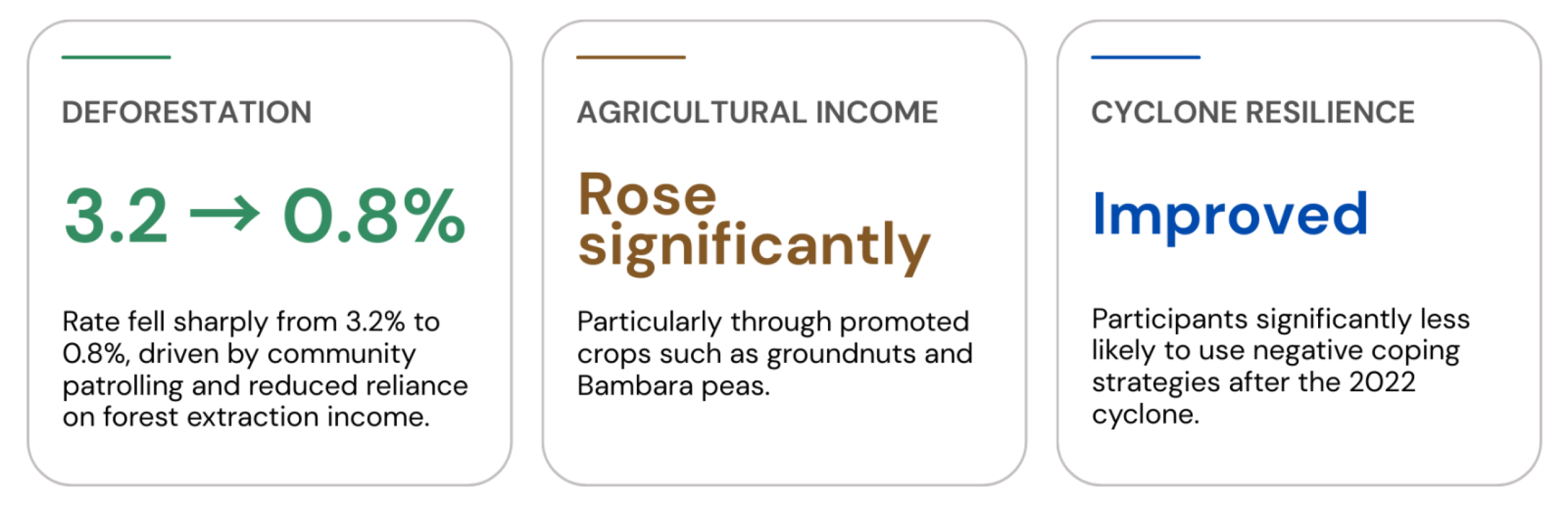
However, SLEM appears to have navigated this trade-off more successfully. The programme combined forest patrolling with concrete livelihood support: farmer training, seeds, small equipment, demonstration plots, and cooperative development. Participating households shifted away from environmentally unsustainable activities, including charcoal production, logging, and mining, toward diversified, farm-based livelihoods. In the wet season, engagement in non-farm livelihoods, which often include environmentally unsustainable activities, fell by nearly 50 per cent, relative to the comparison group.
This shift is accompanied by substantial gains in agricultural production: groundnut production increased more than fivefold, and Bambara pea production nearly tripled. Some longer-cycle cash crops have yet to mature, suggesting that income gains may continue to materialise.
2. The Cyclone Test
In early 2022, during the project's implementation, Cyclones Batsirai and Emnati struck the eastern corridors of Madagascar in quick succession, destroying homes, wiping out crops, and severing already fragile road links. This disaster, devastating as it was, also provided an unusual natural experiment: did the programme make households better able to cope with extreme shocks?
The evidence suggests it did. By comparing cyclone-affected households with unaffected households across project and non-project areas, the impact evaluation finds that SLEM participants were significantly less likely to resort to acute negative coping strategies such as harvesting wild food (−29 percentage points), reducing the number of meals eaten (−32 percentage points), and begging for food (−24 percentage points). These patterns are consistent with households having stronger livelihood buffers. Diversified income sources and greater reliance on food produced on their own farms likely helped households absorb the shock to a certain extent, reducing the need to resort to emergency coping strategies.
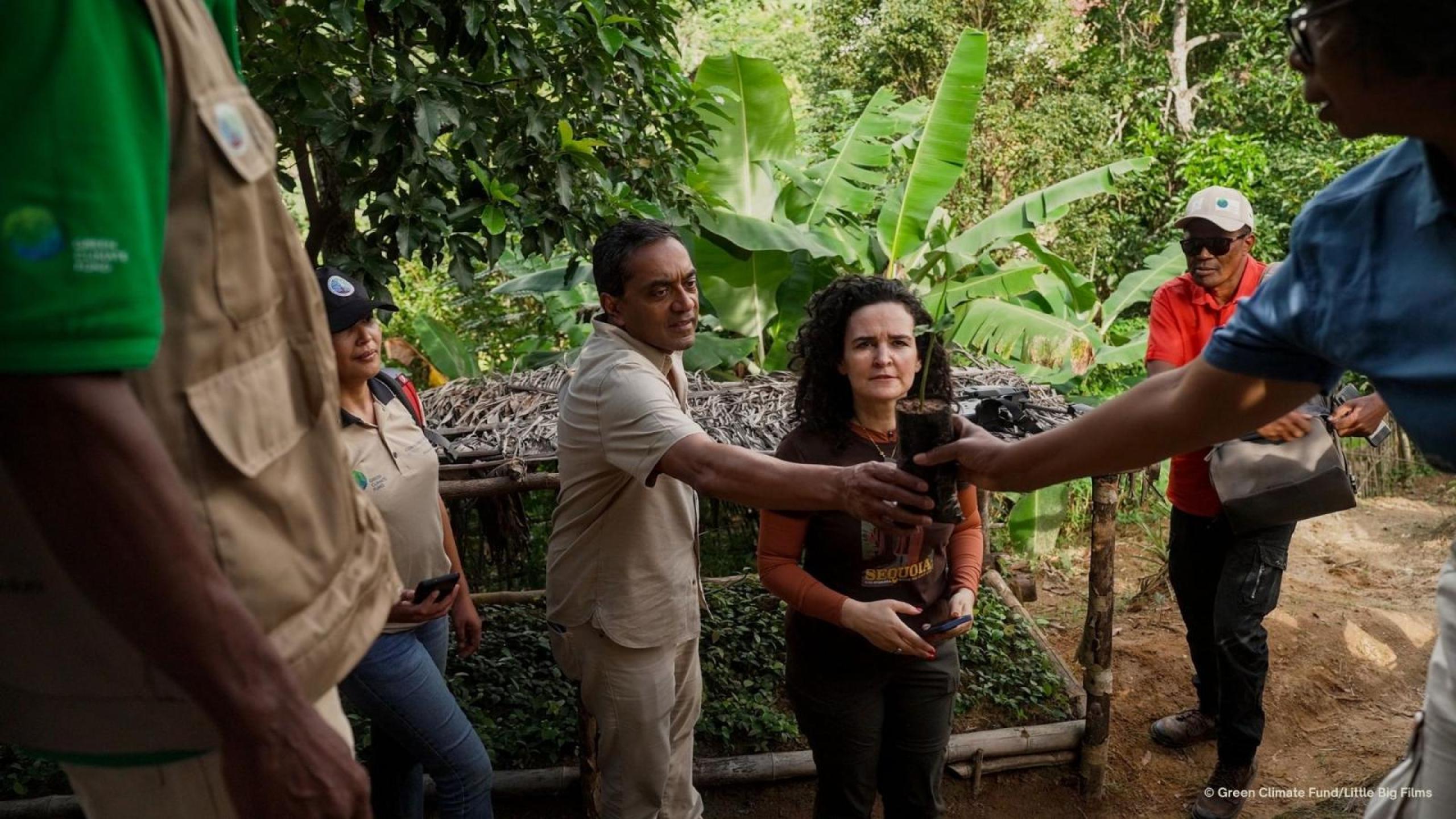
3. Where the Project Saw Unexpected Results
The food security result warrants particular attention. Household incomes rose, but the overall food security index did not improve. One explanation has to do with the households’ spending behaviour: participating households appear to have redirected their income gains toward education and durable assets rather than immediate food expenditure. This is not necessarily irrational; it may reflect forward-looking investment in human capital. But it does mean that income growth alone is insufficient to improve standard food security metrics, and that complementary interventions, nutrition-sensitive agriculture, seasonal safety nets, may be required to close that gap.
4. The Sustainability Challenge and Enabling Factors
The most consequential finding concerns post-project sustainability. The adoption of conservation agriculture practices increased when the project support was active. However, the uptake declined sharply after the project assistance ended. Low-cost practices such as mulching persisted; labour- and input-intensive techniques did not.
This pattern is consistent with the broader evidence on technology adoption in smallholder agriculture: uptake often depends on sustained support unless markets and service providers are successfully “crowded in.” In eastern Madagascar’s remote areas, poor road infrastructure, cited by 46 per cent of participants as a major constraint, limited market integration and reduced durability of project gains.
Female-headed households faced distinct challenges that hindered their continued adoption of resource-intensive practices. Time constraints, reduced access to inputs, and weaker links to extension services disproportionately affected women. A qualitative study conducted by Conservation International Madagascar suggests that local women’s associations may play a critical role in overcoming these gender-related barriers, suggesting that peer support structures can help improve long-term adoption of climate-smart practices when tailored to women’s specific constraints.
What this means for climate finance
In short? Yes, livelihood resilience and forest conservation can be mutually reinforcing and be achieved simultaneously. However, there are important lessons from the SLEM impact evaluation as discussed in this blog. Below, I categorized these lessons and relevant project funding, design- and implementation-related considerations as the following.
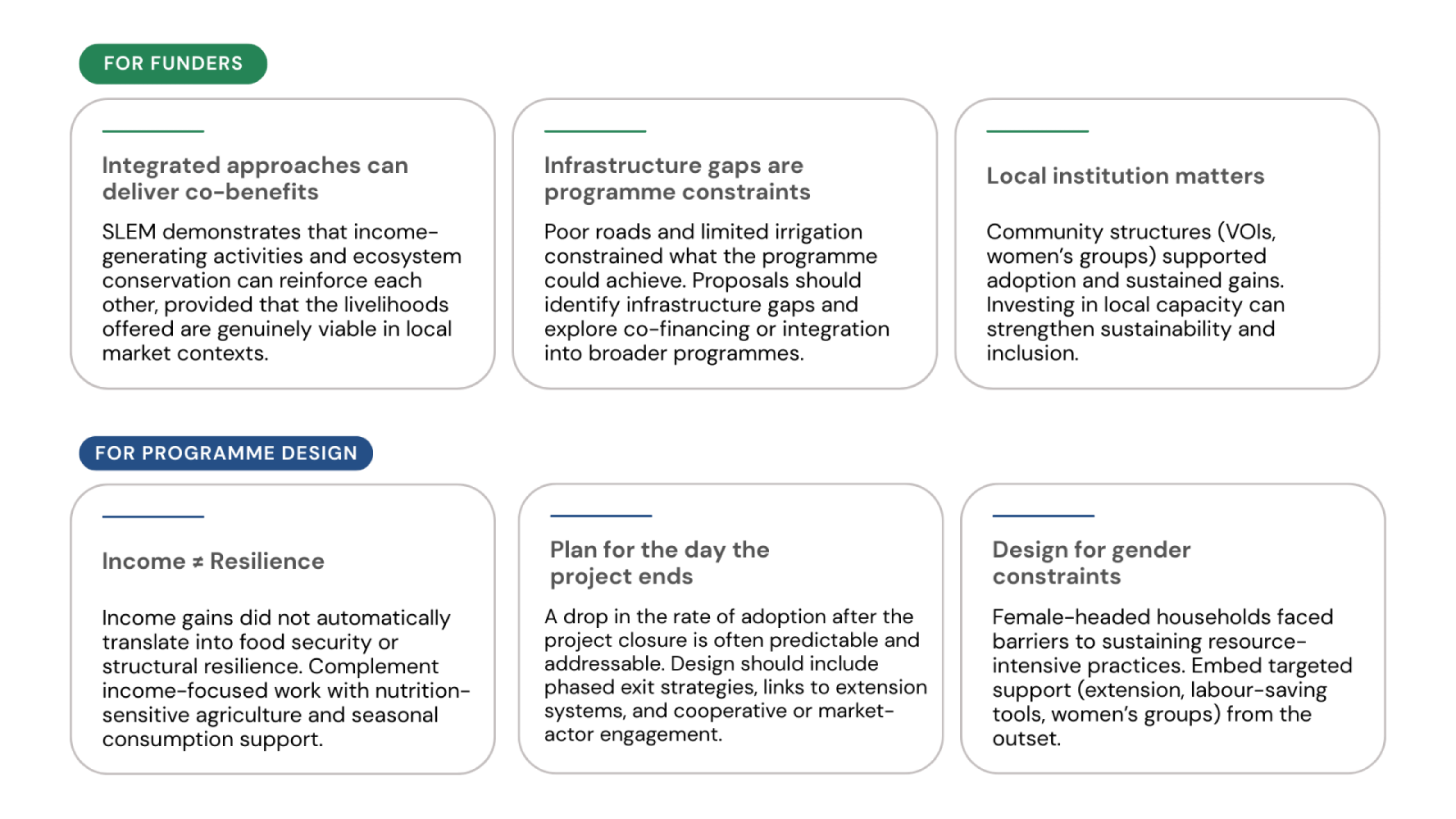
The causal evidence suggests that achieving both conservation and livelihoods outcomes is possible, but with a careful and thoughtful consideration about people’s behaviour, the local institutions that support them, the market links that make gains last, and the gender-responsive design that ensures no one is left behind. For more, you are welcome to read the final impact evaluation report on SLEM here.
Disclaimer: The views expressed in blogs are the author's own and do not necessarily reflect the views of the Independent Evaluation Unit of the Green Climate Fund.