Search
SAP2025: Independent Evaluation of the GCF’s Simplified Approval Process
The evaluation of the GCF’s Simplified Approval Process (SAP) is assessing the extent to which this access modality provides easier access to GCF resources and addresses the needs of countries. The evaluation will be...
Evaluation
Independent evaluation of the GCF’s approach to and Portfolio of Climate Information and Early Warning System Interventions
The evaluation of Early Warning Systems aims to assess the GCF's interventions in climate information and early warning systems. The findings from this evaluation are scheduled to be submitted at the first Board meeting...
Evaluation
Independent Evaluation of the GCF’s Approach to Indigenous Peoples
This evaluation assessed the relevance and effectiveness of the GCF’s approach to and consideration of Indigenous Peoples. It provided inputs to inform the review of the GCF’s Indigenous Peoples Policy and considered...
Evaluation
Annexes to the Final Report: Independent Evaluation of the GCF's Approach to and Portfolio of Climate Information and Early Warning Systems Interventions
This document presents the annexes to the Independent Evaluation of the GCF’s Approach to and Portfolio of Climate Information and Early Warning Systems (CIEWS). It provides detailed methodological information,...
Document > Evaluation document
Independent evaluation of the GCF’s approach to and Portfolio of Climate Information and Early Warning System Interventions (CIEWS)
This evaluation report examines how the GCF has supported developing countries to strengthen resilience, preparedness, and response to climate change. It assesses the Fund’s strategic positioning, partnerships, and use...
Document > Evaluation report
Approach Paper: Independent Evaluation of the GCF’s Gender Approach
This Approach Paper presents the framework and methodology for assessing the effectiveness of gender integration across the Fund’s operations. It outlines the evaluation’s scope, approach, and methods, including...
Document > Approach paper
IEU's Foresight Study on Climate Finance: Technical Discussion Paper
Through this study, the IEU examines how the global climate finance landscape may evolve through 2035 and what this could mean for the Fund’s strategic positioning. Using foresight methods to analyse emerging trends,...
Document > Evaluation document
Independent Evaluation of the GCF's Approach to Country Ownership (COA2025)
This independent evaluation of the Green Climate Fund’s (GCF) approach to country ownership was approved by the GCF Board as part of the 2025 workplan of the Independent Evaluation Unit (IEU) and is submitted in time...
Document > Evaluation report
Webinar: Emerging Conclusions from the PPF and Gender Evaluations, and Key Questions for the Private Sector Evaluation
Between 25 and 26 May, the IEU hosted three webinars on ongoing evaluations of the Green Climate Fund’s (GCF) Project Preparation Facility, the GCF’s Gender Approach, and the GCF’s Portfolio of and Approach to the...
Event > Webinar 
IEU at the 2026 GCF Global Conference with Indigenous Peoples
The Independent Evaluation Unit (IEU) contributed to the GCF Global Conference with Indigenous Peoples in Incheon, Republic of Korea, participating in Session 1-3: GCF and Indigenous Peoples.
The session brought...
Event > External event 
The Evaluation Quality Assessment Tool
The Evaluation Quality Assessment (EQA) Tool supports accountability and learning by assessing the quality of Accredited Entity-led evaluations against the Green Climate Fund’s evaluation standards, policies, and...
Document > Publication
Methodology Report: Evaluation Quality Assessment Framework of AE-led Evaluations
The Evaluation Quality Assessment (EQA) framework is designed for both accountability and learning purposes. AE-led evaluations are individually and collectively assessed by independent reviewers on the extent to which...
Document > Publication
Synthesis on Monitoring and Evaluation
This synthesis seeks to inform the Fund's ongoing initiative to enhance its results management practices. Drawing on past evaluations, reviews, and stakeholder interviews, the synthesis documents the evolution and...
Document > Synthesis
IEU at Glocal Evaluation Week 2026
The Independent Evaluation Unit (IEU) contributed to Glocal Evaluation Week 2026 through virtual participation in three sessions held between 1–5 June 2026.
Glocal Evaluation Week is a global knowledge-sharing...
Event > External event 
IEU Learning Talk: Climate Information and Early Warning Systems
The Independent Evaluation Unit (IEU) of the Green Climate Fund (GCF) hosted a Learning Talk on climate information and early warning systems (CIEWS).
The session brought together a diverse panel of colleagues from...
Event > IEU talk Republic of Korea 
B.45 Activity Report
This report presents the key activities of the Independent Evaluation Unit (IEU) for the period of 1 February 2026 to 31 May 2026. It reports on the IEU’s outputs and achievements in line with the 2026 work plan, as...
Document > Activity report
Gender Synthesis: Benchmarking Exercise
This study was conducted as a component of the Green Climate Fund’s (GCF) Gender Synthesis and as preparatory work for the Independent Evaluation Unit’s (IEU) evaluation of the GCF’s approach to gender. The study...
Document > Publication
Executive Summary: Independent Evaluation of the Green Climate Fund’s Project Preparation Facility (PPF2026)
This document presents the Executive Summary of the Independent Evaluation of the Green Climate Fund’s Project Preparation Facility (PPF2026), which provides the GCF Board and Secretariat with an independent, evidence-...
Document > Evaluation brief
IEU Learning Talk: Third Performance Review of the GCF
On 18 June 2026, the Independent Evaluation Unit (IEU) hosted a Learning Talk to “spill the tea” on emerging findings from the ongoing Third Performance Review (TPR) of the Green Climate Fund.
The interactive session...
Event > IEU talk Republic of Korea 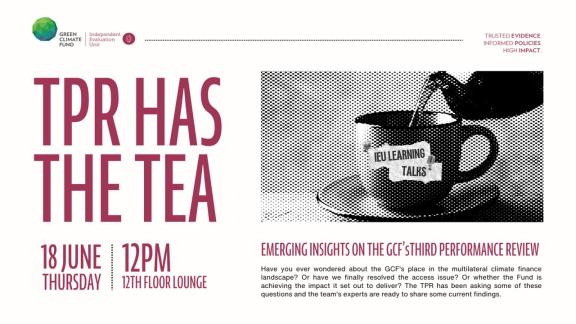
Webinar: What the Country Ownership evaluation found and what comes next
On 22 June 2026, the Independent Evaluation Unit (IEU) hosted a webinar for the Green Climate Fund (GCF) Secretariat on country ownership, bringing together colleagues from the IEU, the Department of Investment Services...
Event > Webinar 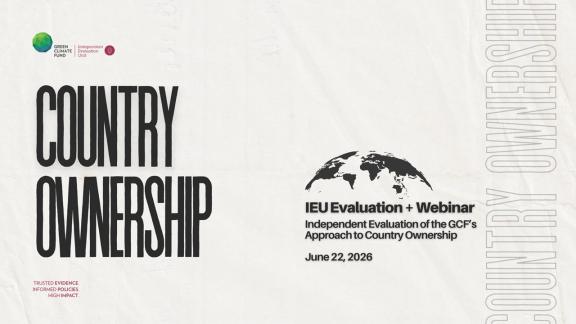
Evaluation Brief: Gender 2025
This brief summarizes the Independent Evaluation of the GCF’s Gender Approach (GENDER2025). It outlines the key conclusions and recommendations that emerged from the evaluation.
Document > Evaluation brief
Executive Summary: Independent Evaluation of the GCF’s Gender Approach (GENDER2025)
This document presents the Executive Summary of the Independent Evaluation of the GCF’s Gender Approach (GENDER2025). The purpose of this evaluation was to examine the GCF’s overall approach to mainstreaming gender...
Document > Evaluation brief
Independent Evaluation of the Green Climate Fund’s Project Preparation Facility (PPF2026)
The evaluation of the Project Preparation Facility provides the GCF Board and Secretariat with an independent, evidence-based assessment of whether the PPF, as currently designed and implemented, is fit for purpose,...
Document > Evaluation report
Jobs
Jobs
The IEU offers a range of employment opportunities for professionals. Whether you’re a young graduate seeking your first internship, a seasoned professional looking for a short term consultancy, someone ready for a...
Basic page
Annexes to the Final Report: Independent Evaluation of the GCF’s Gender Approach (GENDER2025)
This annex volume accompanies the Independent Evaluation of the GCF’s Approach to Gender and includes consulted stakeholders and documents, the evaluation matrix, methodological notes, supporting analysis, and sampled...
Document > Evaluation report
IEU Side Event at B.45: Impacts on the Ground: LORTA Programme Findings from Belize and Uganda
The Independent Evaluation Unit (IEU) hosted a side event highlighting findings from two impact evaluations conducted under its Learning-Oriented Real-Time Impact Assessment (LORTA) programme on the margins of the Green...
Event > External event 
Evaluation Brief: PPF2026
This brief summarizes the Independent Evaluation of the Green Climate Fund’s Project Preparation Facility (PPF2026). It outlines the key conclusions and recommendations that emerged from the evaluation.
Document > Evaluation brief
FP034 - Building Resilient Communities, Wetland Ecosystems and Associated Catchments in Uganda
This evaluation aims to assess the impact of the "Building Resilient Communities, Wetland Ecosystems and Associated Catchments in Uganda" project (FP034). The impact evaluation focuses on two components of the project...
Project > Funding proposal Uganda 
Pages
Filter by type
Filter by Subtype
Filter by Country
Filter by date