A postcard from Nepal
April 2026. I sit at the Kathmandu airport, at the end of the weeklong visit to Nepal. I have been here for the past week as part of the Third Performance Review (TPR) of the GCF, where the team visited seven countries in total. Nepal is the final country visit as part of the TPR, and we are using these visits to get a pulse for the views of countries and partners.
Waiting for my flight, I crack open my copy of The Kathmandu Post with much excitement. I was a journalist in another lifetime, and printed newspapers still give me thrilling gateways into the life of a strange city and country. The day’s paper carries two cover stories, and both can very well bookend this visit to Nepal. The first is an ominous story: the growth projections for Nepal’s economy have been scaled back to 2.3 per cent in 2025–26, as opposed to 4.6 per cent for the previous year. Causes? Rising geopolitical tension, lingering effects of the domestic unrest from 2025 (which has given way to striking optimism, more on which in a second), and climate shocks. Read the story here.
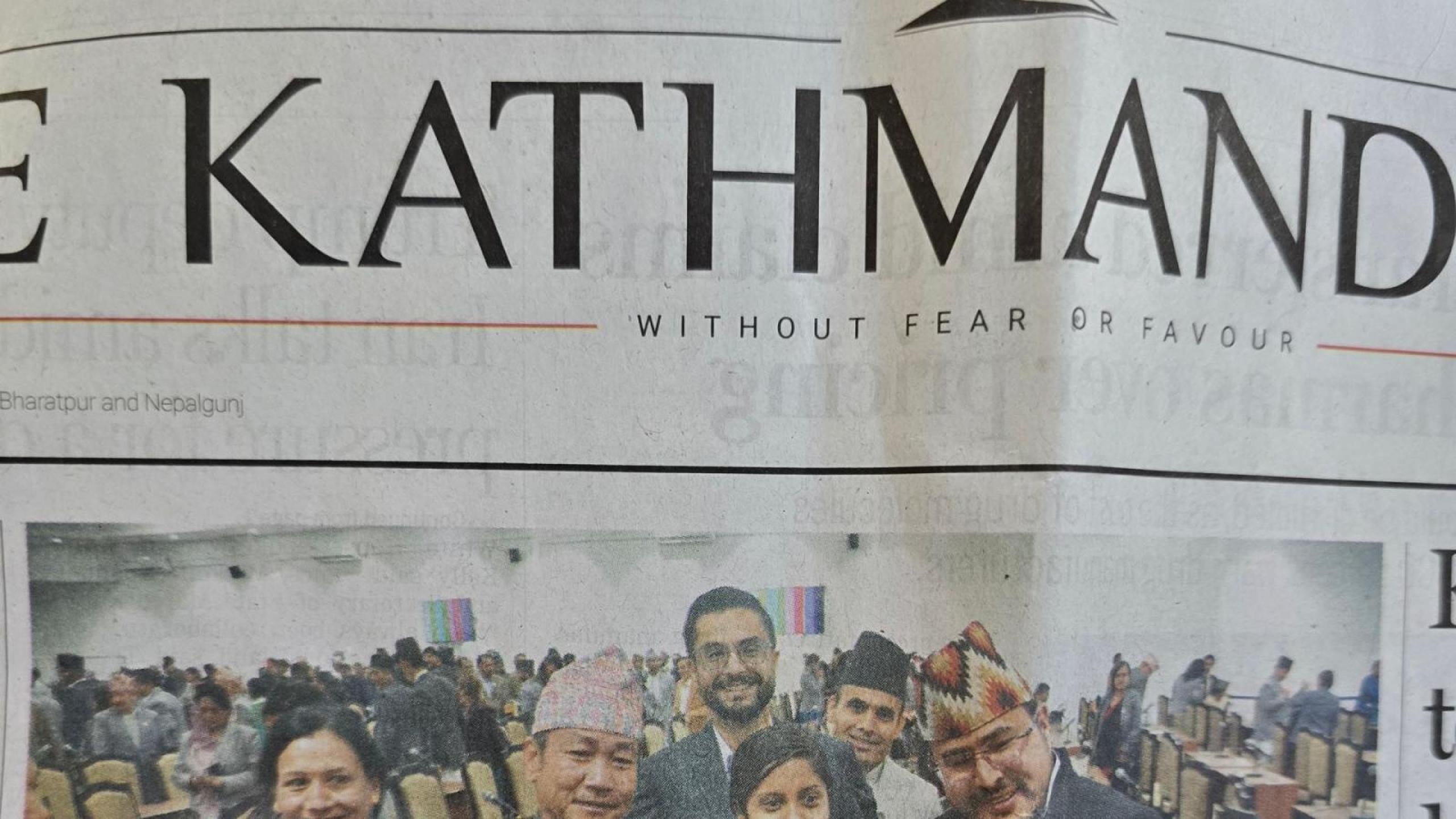
The second story is more exciting and palpable. The House of Representatives elected their Deputy Speaker. At 25 years old, Rubi Kumari Thakur would be the youngest person to hold the position.
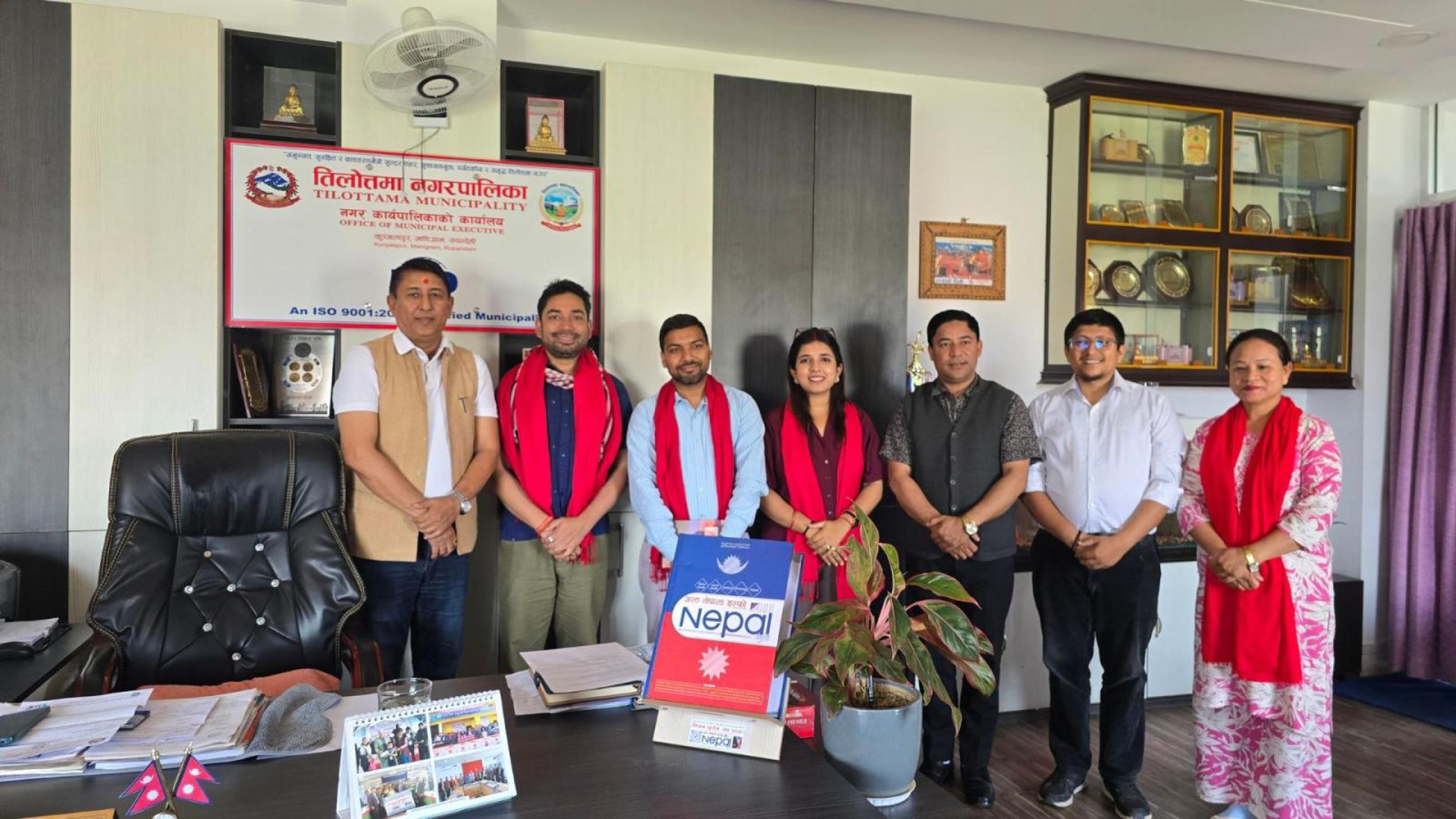
Thakur’s election is one small part of the profound political change that Nepal has undergone in the last year.
The mood of these two stories helps me make sense of the visit to Nepal: infinite challenges of climate and climate planning, coupled with political optimism and a degree of restlessness like a coiled spring ready to go.
In September 2025, violent protests broke out across the country, cascading into political events that ultimately led to the election of the current government in March 2026. The current government, comprising largely young leaders, has a clear majority with which it can create changes that may be politically costly for someone with a less thumping majority. The anticipation is palpable across my conversations throughout the week. Colleagues across civil society and government offices are watching with careful excitement about what change this new government may bring. Across my conversations, there seems to be a mood of general optimism (except for some parts where I sensed either apathy or some degree of concern). But in general, for a country that has undergone a royal massacre, a shift from monarchy to democracy, and fatal political protests within a generation, there is a great deal of optimism about the promise of newfound political stability. At one point, we even catch a glimpse of the new Prime Minister, who is a trained engineer and a musician. The motorcade is impossible to miss, although you could be forgiven for missing the silhouette of the bearded gentleman in the backseat of the luxury sedan, flanked by several military vehicles. He had come to open the parliament session, while we were in the building next door. The motorcade passes quickly. My colleagues completely miss a fleeting glimpse of the man of the hour and think I am making this up.
It is now time to start asking the GCF-specific questions. We were initially a team of three in Kathmandu. Then halfway through the week, I am sent off to the Butwal region in southern Nepal, to meet with project partners and municipal governments. To me, this is the exciting part, where we see GCF resources come to life and set in motion a chain of change.
I have been paraded before as a ‘donor’. During my previous professional life, I have also paraded visiting donors. When I was part of an NGO project machinery at the local level (equivalent of an implementer in the GCF language), we didn’t exactly look forward to visits from the financial partner, but we used them strategically. We always knew where to take our visitors: where there was the more interesting story, where the amusing characters lived, or where the landscape was dramatic, what would overwhelm and intrigue a foreign visitor. The visitor was being charmed by what they saw, and also simultaneously used as currency to show the seriousness of the project to the community and government partners. Two decades later, now as a GCF staff member, I am on the receiving end of the same hospitality, genuine but full of purpose. I end up visiting three municipalities, meeting three mayors, dozens of households, along with staff of the Accredited Entity, and community organizers appointed by the municipal office.
Across three municipalities, I ask about climate and priorities. Three municipalities, three different lives, three different priorities. One talks of protection against floods, another about landslides, and the third about job creation. Yet, the project I am visiting has provided households with alternative cookstoves. (Let me put a plug here for the IEU's Learning-Oriented Real-Time Impact Assessment Programme, which is helping with an impact assessment of the project). To what extent are local priorities reflected by the GCF portfolio? For example, renewable energy is a key national target, and Nepal has relevant DAEs as well as a veritable portfolio on renewable energy. Is renewable energy also necessarily the priority at the municipal or household level? I am neither sure that it is, nor am I sure that we need to seek such universality. It makes me reflect on the question of country ownership and the right level to pitch GCF projects.
Do projects in Nepal contribute to national objectives? Yes.
Do all the projects necessarily reflect universal priorities? Probably not.
Coming fresh on the heels of an IEU evaluation on country ownership, I am stumped by this paradox. It makes me think again about what country ownership means within plural societies. Country ownership within the GCF does not (and perhaps cannot, within plural societies) reflect a single, unified democratic will. Rather than approximating Jean-Jacques Rousseau’s idea of a general will, it operates through institutions of representation that aggregate and prioritize at the national level, while remaining only partially responsive to differentiated local claims. In pluralistic societies, seeking a single, unified set of priorities across all levels would be tough and perhaps not worth pursuing. The task, therefore, is not to manufacture consensus across these levels, but to justify how and why certain priorities prevail, through processes that are inclusive, reasoned, and open to contestation, closer to a deliberative ideal than to a uniform expression of collective preference.
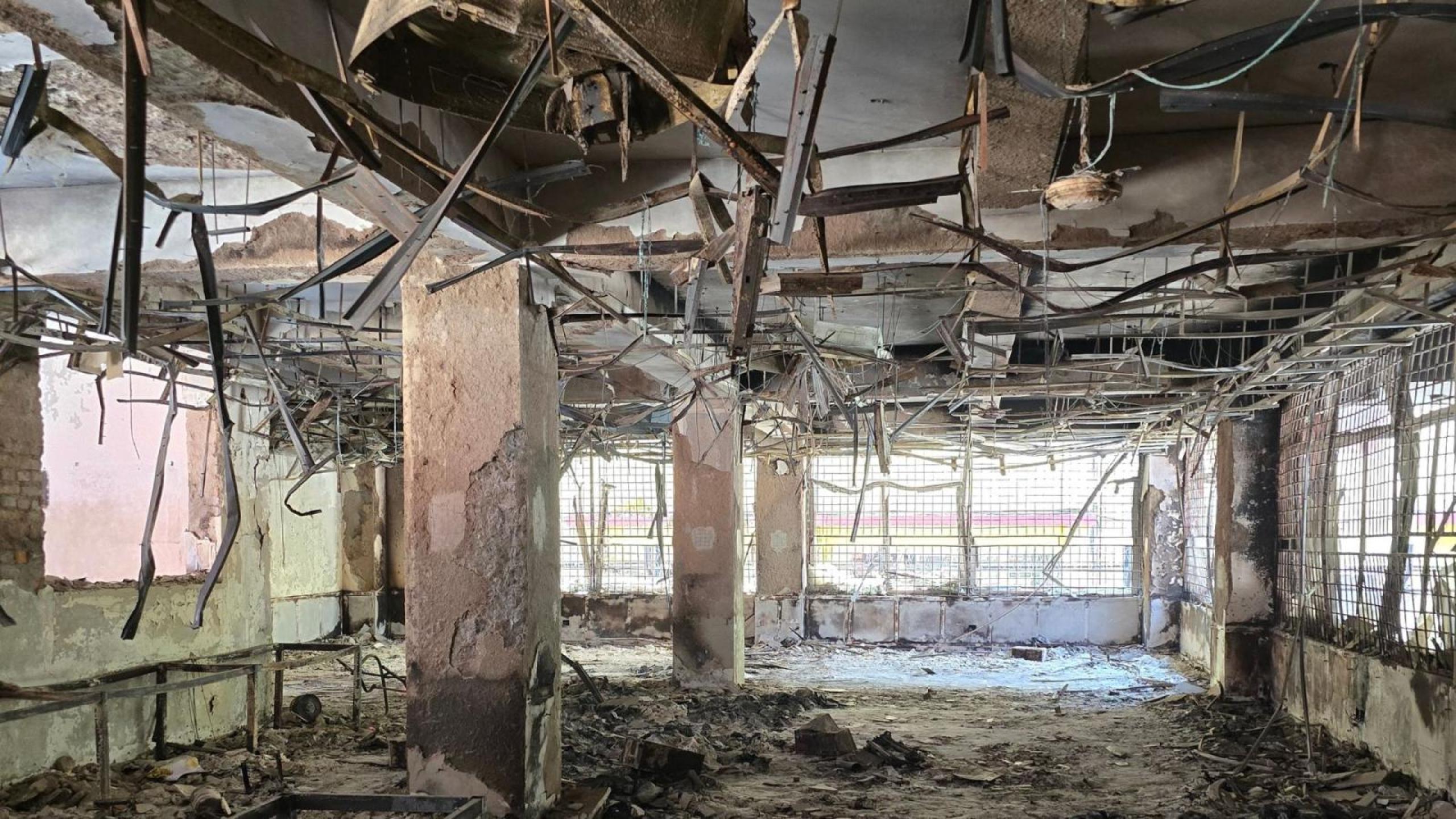
At one of the municipal offices, I can’t help but notice scars of the Gen Z protest of 2025. The office building was set on fire during the protests. The project too suffered from delays when some of the cookstoves meant for distribution were burned. Of course, this was a force majeure, perhaps not foreseen by the GCF project. I am not yet sure how this was accounted for and to what degree it may have delayed the project.
The TPR summary report, however, flags issues around adaptive management and project delays.
As I close my newspaper and start the boarding process, my mind is wondering about the changing context of Nepal and what it tells us about the development landscape around us. Beyond the immediate questions of climate projects and country ownership, Nepal is also navigating a changing international development-finance landscape.
What does it mean for Nepal to graduate from LDC status, a recognition of increased capacity that also means relinquishing some of the preferential treatment that came with being an LDC? What does geopolitics mean for a country that has been the darling of development aid for strategic and humanitarian reasons?
Remittances are another part of Nepal’s development finance story that sits largely outside GCF narratives. Remittances were equivalent to about 26 per cent of GDP in 2024, roughly one dollar in four.
And what about the change in ODA? A few days after the visit, the OECD-DAC launched consultations on a wider review that includes country eligibility and the ODA graduation process. Nepal is also going to face the challenge of decreasing ODA, which comes up in a lot of interviews already.
The discussions within Nepal and indeed all country partners with whom I have engaged are filled with a quiet indignation with the current reduction in ODA. At the national planning level there is generally a sense of anticipation about how to plan for an uncertain future. At the execution and implementation level, there is uncertainty about the level of resources to which they will have access. Neither level characterizes themselves as utterly dependent on development aid. However, the pace of change would be too rapid for anyone to catch up. The systems are dismantling faster than we can keep up. How long do societies and polity take to catch up to such changes: a decade? Two decades? Do we have the luxury of two decades to catch up?
Postscript.
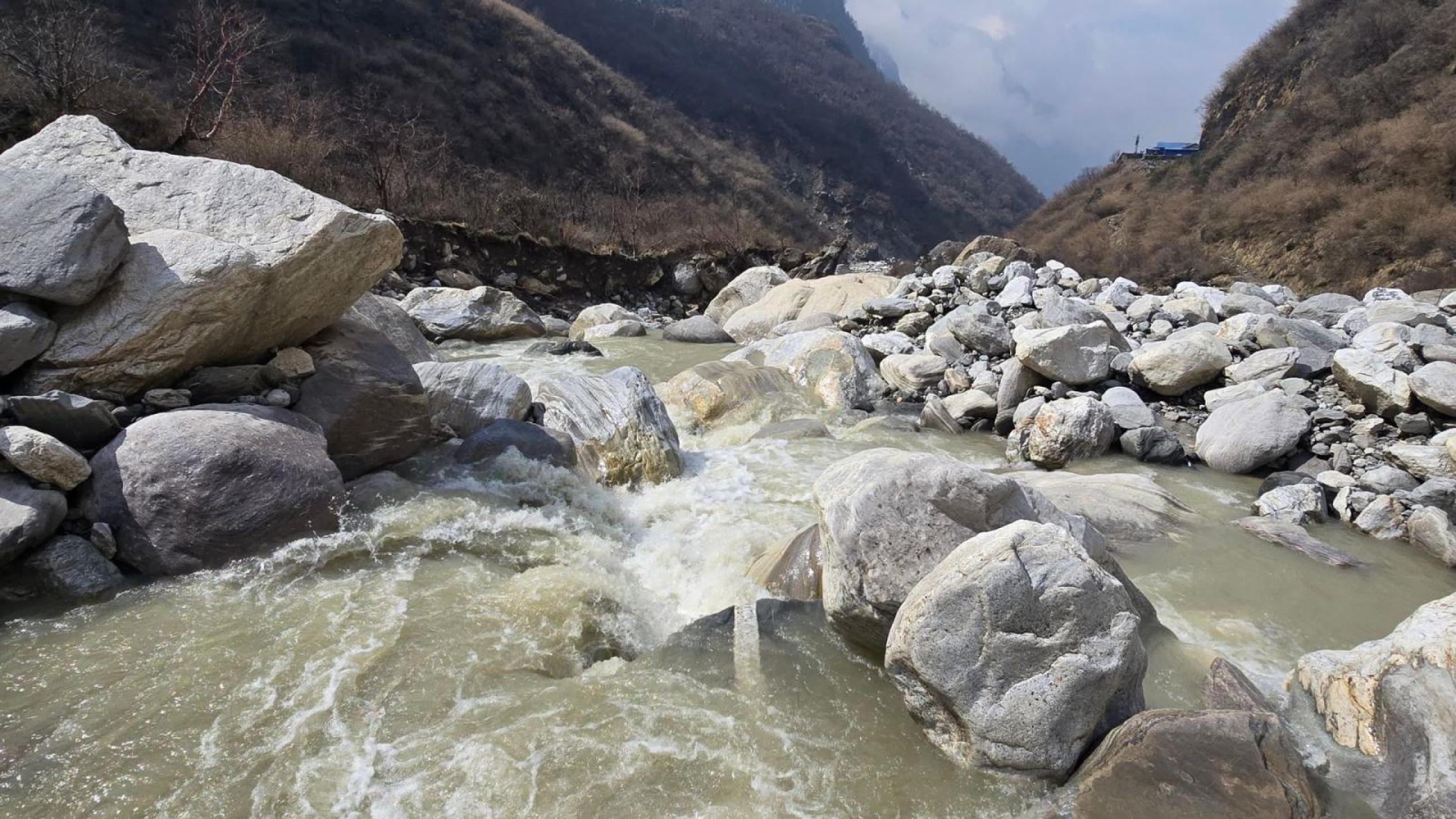
A few months after the visit, devastating flash floods struck in the Bhotekoshi river region, in a sobering reminder of the urgency and potency of climate-induced risk. Are some of the climate shocks expected by the news story in The Kathmandu Post materializing right before our eyes? The tragedy makes you feel simultaneously a deep sense of regret that it should happen, and a sense of outrage at the urgency of the issue and a sense of helplessness. What does it take for us to act? In another context, Jocelyn Wyatt, CEO of Alight, discussed that some crises receive responses and some don’t because of public narrative fatigue, donor bias, and political media coverage. Read the GCF’s statement on the Nepal tragedy here.
Disclaimer: The views expressed in blogs are the author’s own and do not necessarily reflect the views of the Independent Evaluation Unit of the Green Climate Fund.