IEU Learning Talk highlights insights from CIEWS evaluation and future directions
-
Authorship
Sean Tan
![]()
Intern - Article type News
- Publication date 23 Jun 2026
On June 2, the Independent Evaluation Unit (IEU) hosted a Learning Talk on climate information and early warning systems (CIEWS), bringing together colleagues from the IEU, the GCF Secretariat, the Climate Risk and Early Warning Systems (CREWS) Secretariat and the World Meteorological Organization (WMO) to reflect on evaluation findings and future directions.
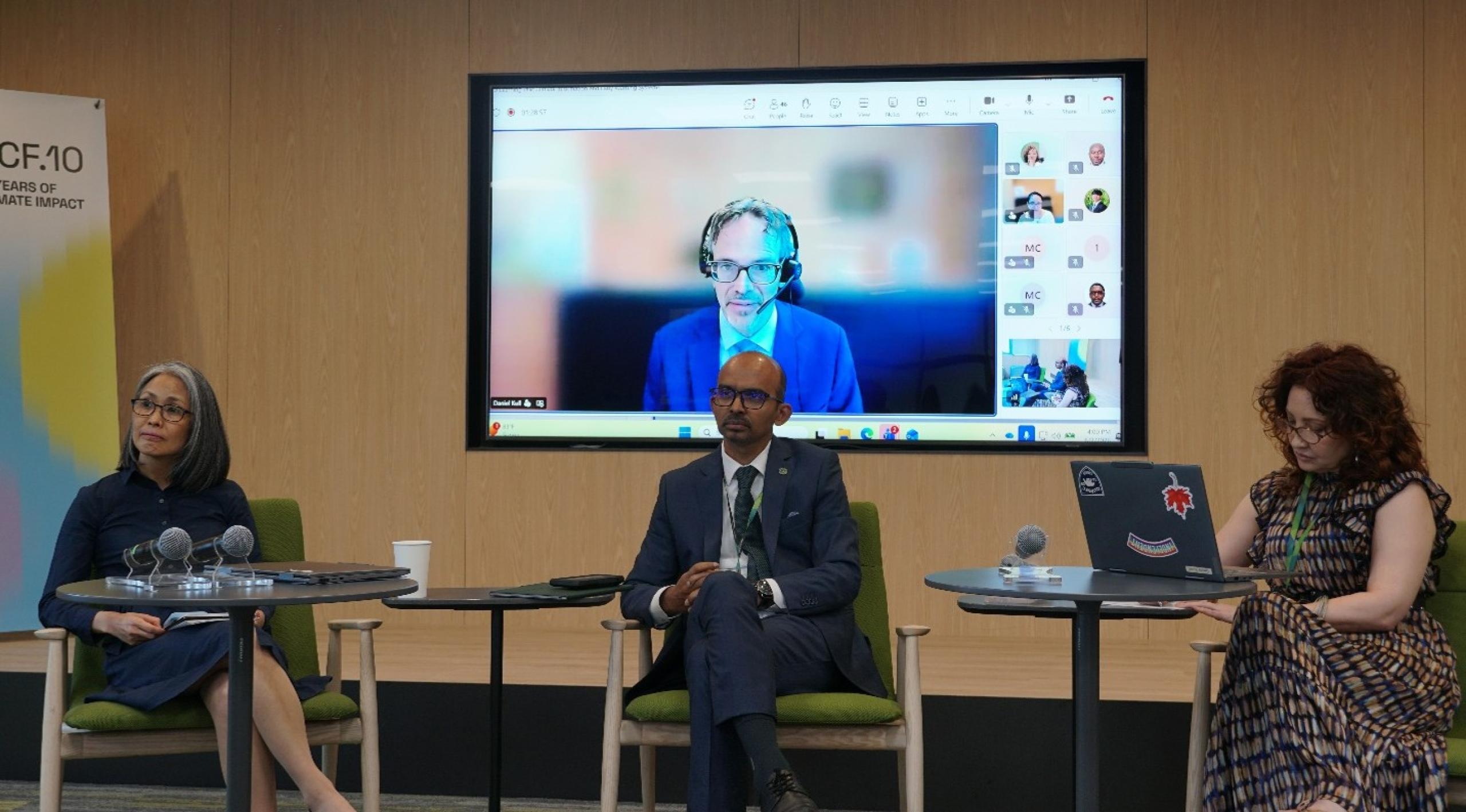
Moderated by Evaluation Specialist Genta Konci, the session featured Aiko Ward (Principal Evaluation Officer, IEU), Daniel Kull (Director, WMO), and Bapon Fakhruddin (Climate Investment Principal), with Joseph Intsiful (Climate Investment Principal) and Elkaye Macasil (Senior Programme Officer, CREWS Secretariat) joining the discussion segment.
Evaluation of GCF’s CIEWS investments: Key findings and lessons
Aiko Ward presented findings and lessons from the recent evaluation of GCF’s investments in CIEWS:
- The findings highlight the importance of engaging end users from the outset, as trust and relevance are critical for ensuring that early warning information leads to action.
- The evaluation also emphasizes the need for integrated approaches that address multiple dimensions of risk, including exposure, vulnerability, and hazards, to ensure long-term effectiveness.
- Key challenges identified include limited private sector engagement, difficulties in implementing multi-country programmes, and the absence of a clear framework to support such approaches.
The analysis further found that many systems labeled as multi-hazard do not fully capture the interconnectedness of hazards, pointing to an important gap in current project design.
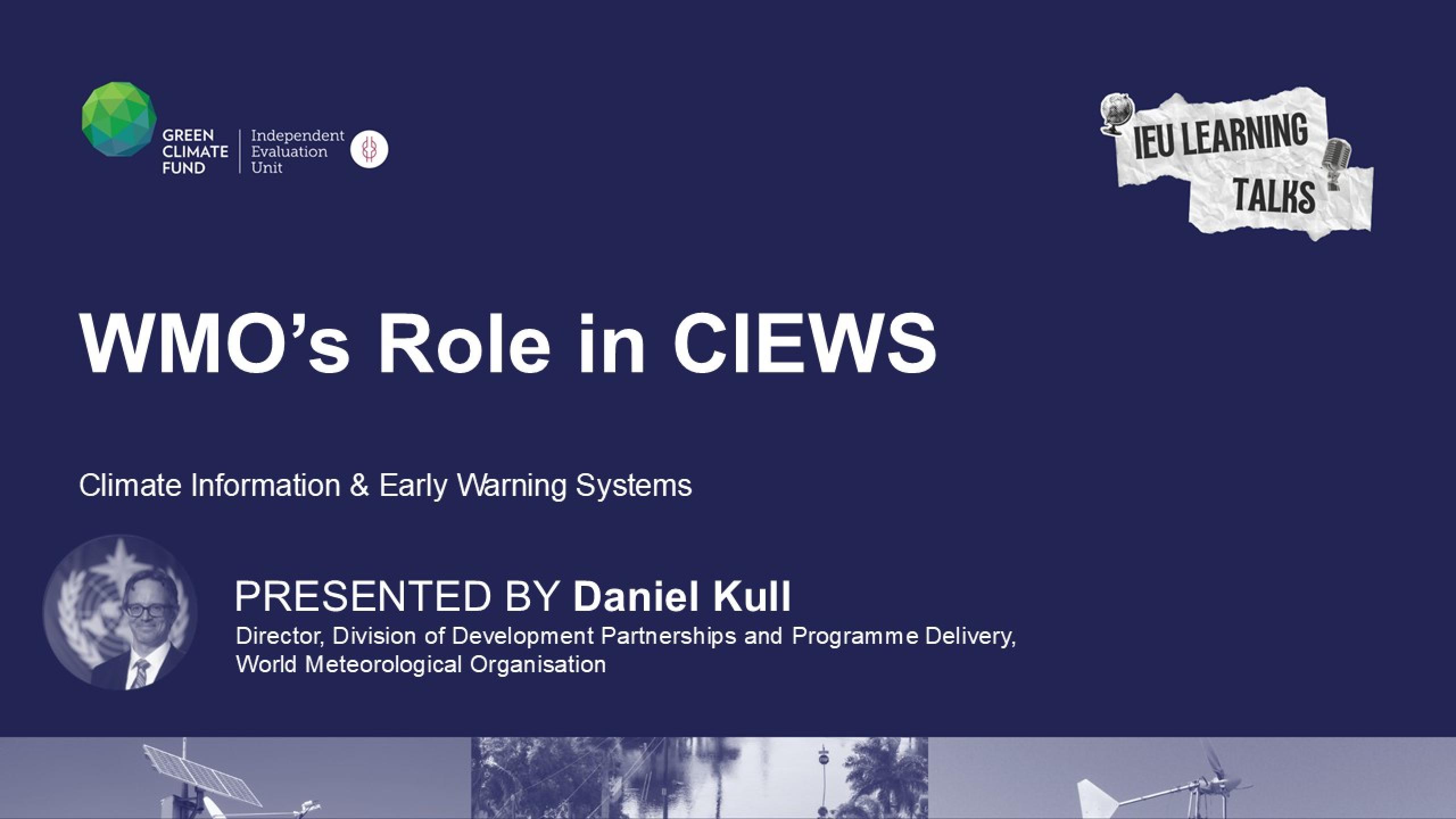
WMO’s role: Standards and technical support
Daniel Kull highlighted WMO’s role as the global backbone for weather and climate information that coordinates 193 member states through national meteorological and hydrological agencies to ensure interoperability and data exchange:
- WMO provides technical standards and systems for observation, forecasting, and real-time data sharing, including global infrastructure such as the WMO Integrated Global Observing System (WIGOS) and the WMO Information System (WIS 2.0).
- Its support spans the full early warning value chain, from strengthening observation and forecasting capacity to translating data into actionable services across sectors such as agriculture, water, energy, and disaster risk reduction.
- WMO also plays a key role in data management and digital transformation, including data policies, digitization, and open data frameworks to ensure modern, interoperable systems.
The presentation emphasized the importance of partnerships with GCF and other actors to strengthen systems and enhance sustainability.
GCF reflections: Toward integrated and sustainable systems
Bapon Fakhruddin reflected on what the evaluation findings mean for GCF’s future approach to early warning systems:
- GCF’s investments need to be understood within global frameworks, particularly the Early Warnings for All initiative and the Sendai Framework.
- Current efforts remain heavily focused on upstream components, such as observation and modelling, while gaps in last-mile delivery and user response limit real-world impact.
- This imbalance raises concerns about whether systems are effectively translating technical outputs into tangible benefits for communities, underscoring the need for a stronger user-centred approach.
- Financing remains a key challenge, with most projects relying on grant-based models, highlighting the need for blended finance, public-private partnerships, and more sustainable funding approaches.
Bapon also explained that, despite strong evidence of high returns on investment, private sector engagement remains limited, pointing to the need for clearer investment cases and enabling policy environments.
Discussion: Sustainability and Partnerships in Focus
During the discussion, the discussants (Joseph Instiful and Elkaye Macasil) highlighted the importance of strengthening sustainability and scaling impact through integrated systems, partnerships, and country-driven approaches.
- Panelists emphasized the need to move from fragmented projects to integrated system-level approaches, where GCF can play a significant role in collaboration with WMO and other key actors.
- Sustainability and scale emerged as key priorities, requiring stronger alignment of financing, partnerships, and country ownership.
- Collaboration mechanisms such as the GCF–SAP - Climate Risk and Early Warning Systems (CREWS) Scaling-up Framework for early warning were highlighted as important for scaling successful initiatives and strengthening system foundations. This model can help the GCF deliver greater impact, foster stronger country ownership and better value for money while accelerating progress toward universal early warning coverage.
- GCF should require that all CIEWS proposals include participatory needs assessments that engage vulnerable groups from the design phase, as these are proven drivers of sustained behavioral change.
The discussion also underscored the importance of inclusive, country-driven design and stronger coordination across partners to ensure long-term effectiveness.
- For more information, visit the CIEWS evaluation page.