FP101
Resilient Rural Belize (Be-Resilient) (RRB)
Resilient Rural Belize (Be-Resilient) (RRB)
Value chain development and Food security: We conducted two impact evaluations under this project. The first evaluates the impact of matching grants on the sales and income of producer organisations and associated members. The second one measures the impact of a backyard garden initiative to increase rural households' food security and their capacity to cope with climate change. Smallholder producers generally lack the resources and the capacity to improve their production and sell their products in markets. This project, implemented by the International Fund for Agricultural Development (IFAD) offers matching grants to producer organizations to fill these gaps. The evaluations focus on analyzing the effectiveness of matching grants in strengthening value chains and enhancing the capacity of rural producers to adapt to climate change.
-
TopicAgriculture & adaptive livelihoods
-
Project componentClimate Resilient Value Chain Development
-
Impact evaluation designDifference-in-Difference (DiD)
Propensity Score Matching (PSM)
Randomised Control Trial (RCT)
-
Target beneficiaries30 producer organizations and at 300 members (50 % women) for Matching grants / 1595 households for backyard garden
Timeline
Onboarded to LORTA
Nov 2020
Baseline data collected for matching grant fund evaluation
Mar 2023
Endline data collected for backyard garden evaluation
Jan 2024
Expected date for endline data collection for matching grant fund evaluation
Sep 2024
Expected date for endline report for backyard garden published
Sep 2024
Expected date for endline report for matching grant fund evaluation
Mar 2025
One region
- Latin America and the Caribbean
One country
- Belize
Reports
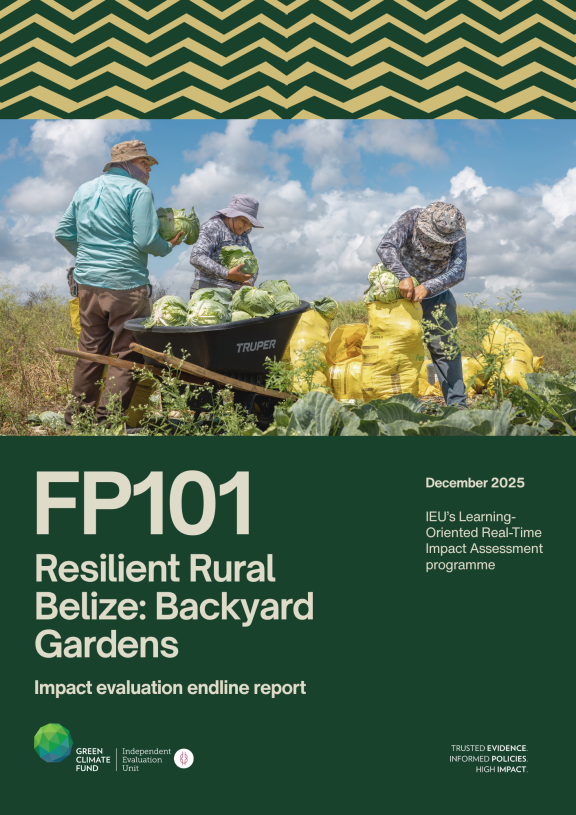
Impact evaluation report for FP101: Resilient Rural Belize – Backyard Gardens
10 Dec 2025
This impact evaluation, based on a phase-in randomized controlled trial, draws on baseline data collected in 2021 and endline data gathered in early 2024 from 1,350 households (representing 85 per cent coverage). It examines the programme’s effectiveness in improving household income and food security, as well as strengthening resilience to climate shocks. The findings show that the intervention increased incomes by an average of 1,371 BZD and strengthened resilience to climate shocks, with households reporting fewer losses and reduced reliance on external coping strategies.